

Staking Before an Advanced Manufacturing Site Goes Vertical
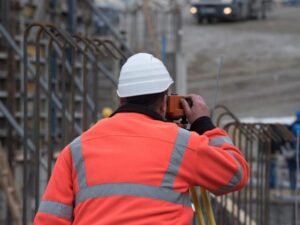
A finished factory building looks simple. Steel goes up. Walls close in. The site looks done.
But every part of that building depends on choices made much earlier. Construction staking is where those choices get marked on the ground. It shows crews exactly where to build.
Staking guides every part of the job. This includes the foundation, the pipes and wires, and the building itself.
If you are building an advanced manufacturing site, staking matters a lot. Getting it right early can save you from costly mistakes later.
Establishing Survey Control Before Detailed Site Layout
Good layout starts with survey control; it means fixed points on the ground that never move. Every other measurement on the site gets checked against these points.
A surveyor sets these points first, before any staking begins. They use careful tools and exact coordinates. These points become the base for everything else, like building corners, pipes, and grading.
Weak control points can cause big problems. A small mistake at the start can grow much larger later. A wall that starts a few inches off could end up feet away from where it should be.
keeps growing with big industrial projects. Many of these projects run on tight schedules. Setting up control early helps keep the project moving instead of causing delays.
Why Control Points Cannot Be an Afterthought
Some projects try to save time. They skip careful control setup and use rough measurements instead. This almost always backfires. Crews find mistakes later, and fixing them takes much more time.
Coordinating Building and Utility Layout From Common Control
A manufacturing site needs the building, the pipes, and the site roads to all line up. This only works if everything uses the same control points.
If the building layout and the pipe layout come from different points, problems show up fast. A pipe might cross right where a wall footing needs to go. A loading area might not match up with the building’s doors.
Construction staking stops this problem. It gives every crew the same set of points to work from. This includes:
- Building corners and column lines
- Pipes, wires, and where they connect
- Site grading and drainage paths
- Parking lots, roads, and loading areas
When everyone uses the same control points, crews spend less time fixing mismatched work.
Maintaining Elevation Control Across Large Industrial Sites
Height matters just as much as flat layout, especially on big industrial sites. Manufacturing buildings need exact floor heights. Site grading needs to handle water drainage across a huge area.
Construction staking also marks exact heights at key spots across the site. This guides grading crews, foundation crews, and pipe crews at every stage of the job.
A few spots where height control matters most:
- Foundation heights that must match the engineer’s plans
- Site grading that moves rainwater away from buildings
- Pipe depths that must stay consistent underground
On big sites, even a small height mistake can mess up drainage over a wide area. Checking height control before major grading work starts helps avoid expensive fixes later.
Checking Control Before Critical Construction Phases
Control points do not always stay untouched. Heavy machines, grading work, and busy job sites can bump or destroy these points over time.
Checking control points before major phases protects the accuracy of the whole project. This matters most before foundation work, before pipe installation, and before any step where a mistake would cost a lot to fix.
Things worth checking before these phases:
- The original control points are still there and undisturbed
- Any damaged or missing points have been set again
- Heights have been checked again if a lot of time has passed
If your project has many phases or a long schedule, plan time for these checks. Finding a moved control point before pouring a foundation costs far less than finding it after.
Supporting Consistent Layout Across Multiple Contractors
Big manufacturing projects often have many contractors working at the same time. Foundation crews, pipe crews, and steel crews all need to use the same layout information.
Construction staking helps by giving every contractor the same control points and staked marks. This lowers the chance of crews building mismatched work on their own schedules.
Benefits of staking for teamwork include:
- The same reference points for every crew
- Less risk of clashing layouts between crews
- Fewer delays from rechecking measurements
For a project as big as an advanced manufacturing site, this teamwork often decides if the schedule stays on track. Ask your general contractor early how staking will be shared across all crews on site.